

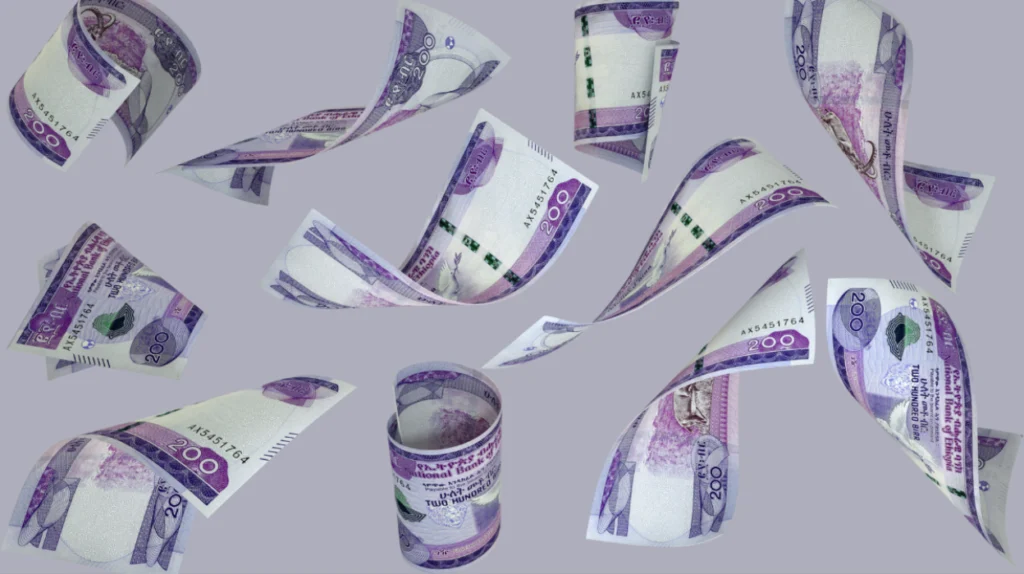
Ethiopia’s birr has fallen to a record low against the US dollar despite the central bank spending about $2.2 billion this year to support the currency, Bloomberg reported, as rising import costs and strong demand for foreign currency continue to put pressure on the exchange rate.
The birr has weakened 3.2% this year to nearly 162 per dollar, making it the weakest-performing currency among 23 African currencies tracked by Bloomberg over the past year. The currency has continued to lose value since the government’s IMF-backed exchange-rate reform in 2024.
The pressure has intensified amid higher global oil prices linked to the conflict involving Iran, increasing the cost of fuel and fertilizer imports while also affecting remittance flows from Ethiopian workers in Gulf countries.
“The lack of FX availability is being driven by a structural current-account deficit,” Sarah Baynton-Glen, an Africa economist at Standard Chartered, told Bloomberg. Ethiopia’s status as an oil importer means the birr tends to face greater pressure when international oil prices rises, she said.
Foreign-exchange shortages have also widened the gap between official and informal rates. Bloomberg reported that the US dollar was trading for about 180 birr on the streets of Addis Abeba, roughly 15% above the official rate.
The National Bank of Ethiopia’s foreign-exchange interventions have attracted strong demand. At its latest dollar auction, banks reportedly sought four times the amount of foreign currency made available by the central bank. Bloomberg said some banks were bidding as low as 163 birr per dollar at the 12 August auction.
Mered Fikireyohannes, chief executive officer of Addis Ababa-based Pragma Advisory, said demand for foreign currency is expected to remain high ahead of Ethiopia’s New Year on 11 September, alongside increased imports and letters of credit.
The interventions are also expected to put pressure on Ethiopia’s foreign-exchange reserves, although the central bank has not disclosed reserve holdings in dollar terms. An IMF report in July estimated Ethiopia’s reserves at about $5.9 billion.
Meanwhile, the government is projecting a wider budget deficit for the fiscal year that began in July, citing additional costs linked to the Iran conflict, including fuel subsidies.
Standard Chartered’s Baynton-Glen expects the pace of birr depreciation to slow, forecasting an exchange rate of 163 per dollar by year-end. David Cowan, chief Africa economist at Citigroup, however, told Bloomberg he expects the birr could weaken to between 185 and 195 per dollar by the end of the year as demand for foreign currency continues to exceed supply, although he expects authorities to prevent the rate from crossing 200 birr per dollar
Ethiopia’s currency has faced sustained pressure since the government introduced an IMF-backed foreign exchange reform in July 2024, replacing the long-standing state-controlled exchange-rate system with a market-based regime in which rates are largely determined by supply and demand
In January 2026, Addis Standard reported, citing audited financial statements and Kenya-based The EastAfrican, that the National Bank of Ethiopia (NBE) had recorded foreign exchange losses equivalent to about $2.6 billion following the exchange-rate reform.
The NBE reported foreign exchange losses of 407.1 billion birr in the financial year ending 30 June 2025, largely attributed to the revaluation of its foreign-currency assets and liabilities following the exchange-rate realignment. Foreign exchange losses had risen sharply from 38.13 billion birr the previous year to 445.23 billion birr.
The losses pushed the central bank’s overall operating loss to 428.56 billion birr, compared with 10.51 billion birr a year earlier, and resulted in negative equity of about 380 billion birr.
In December 2025, Addis Standard, citing Bloomberg, reported that the birr had depreciated by more than 15% against the US dollar during the year, ranking it among the three worst-performing currencies globally tracked by Bloomberg, behind the Argentine peso and Turkish lira.
Bloomberg reported that the outlook for the birr was closely linked to Ethiopia’s efforts to restructure its external debt, with progress seen as important for restoring investor confidence and supporting the currency. Ethiopia has been pursuing debt restructuring under the G20 Common Framework and reached an agreement with its Official Creditor Committee to restructure about $3.5 billion in loans.
By July 2026, Addis Standard, citing Business Africa, reported that the NBE had significantly increased its foreign-exchange interventions. The central bank sold $200 million to commercial banks in June alone and had injected roughly $3 billion into the foreign-exchange market since January, more than three times the amount supplied throughout the previous year.
The interventions were aimed at meeting urgent import demand, improving foreign-exchange liquidity and supporting the birr. While the measures had helped reduce long-standing foreign-exchange backlogs and limit exchange-rate volatility, the continued need for central bank intervention has highlighted persistent imbalances between foreign-currency supply and demand.
Source: Addis Standard
