

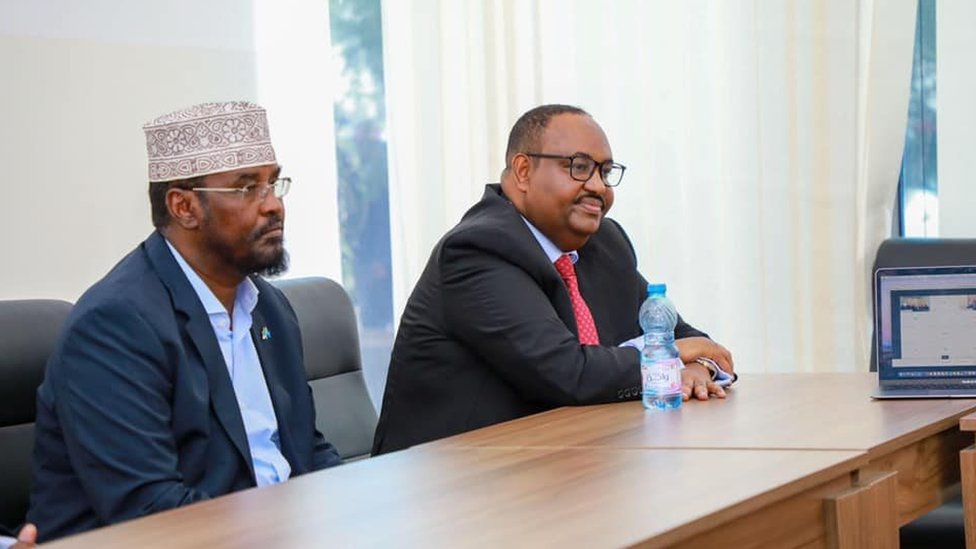
Political tensions in Somalia escalated this week as leaders from Puntland and Jubaland expressed strong concerns over what they described as attempts by the federal government in Mogadishu to centralize power at the expense of the country’s federal structure.
Speaking at a public event in Bosaso on Wednesday, Puntland President Said Abdullahi Deni warned that Somalia was “on the edge,” accusing President Hassan Sheikh Mohamud of pursuing a “manipulative and dangerous” agenda under the pretext of democratic reform. Deni cautioned that failure to initiate an inclusive national dialogue could drive the country toward externally mediated reconciliation.
“This is not just a political disagreement. It’s a matter of national survival. The federal model is being undermined, and that puts the country’s unity and stability at risk,” said Deni.
Meanwhile, Jubaland President Ahmed Mohamed Islam Madobe whose election legitimacy formed genisis of fallout with the federal government issued a similarly grave warning from Kismayo. In a statement released by the Jubaland State House, President Madobe criticized the recent launch of President Hassan Sheikh’s political party, describing it as “unconstitutional” and lacking inclusivity.
He called for a national salvation conference that would bring together key stakeholders from across Somalia, including federal member states, civil society, and political groups. “We urge our international partners to pay close attention to the deteriorating political environment and to engage before the situation becomes irreversible,” he said.
Jubaland’s statement further highlighted concerns about growing centralization of authority in Mogadishu, warning that such developments threaten Somalia’s fragile federal system. “This is a critical moment. The federal system is under threat, and we must act now to protect the democratic gains made over the past decade,” the statement read.
The federal government has not formally responded to the remarks. However, tensions between Villa Somalia and the two federal member states have been simmering for months, particularly over proposed constitutional changes , control of security forces, and the conduct of future elections (the federal government’s implementation towards universal suffrage-one man one vote.)
Mustaqbal
