

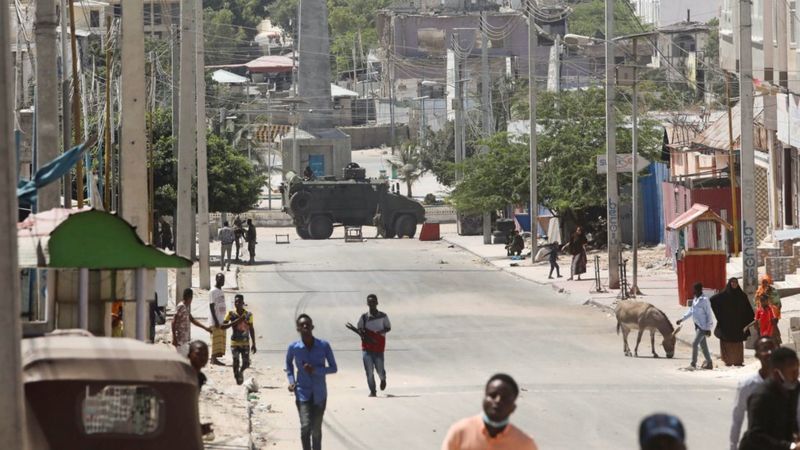
On February 19, clashes took place in Mogadishu between the troops close to the government and the armed forces supporting the opposition.
The confrontation of certain groups in the military in Somalia turned into a military and political crisis that also engulfed soldiers trained by Turkey. It is commented that the security forces trained by Turkey “are being used for political purposes and this situation harms Turkey’s reputation”.
The crisis in the country started with the postponement of the elections and the announcement of President Mohammed Abdullah Muhammed, known as “Farmajo”, that he extended his term of office for another 2 years. Although the President said that he would back down and hold elections at the beginning of May, the tension between the opposition and the government turned into street clashes in the last 3 months, and the fear of “return to civil war” prevailed in the country.
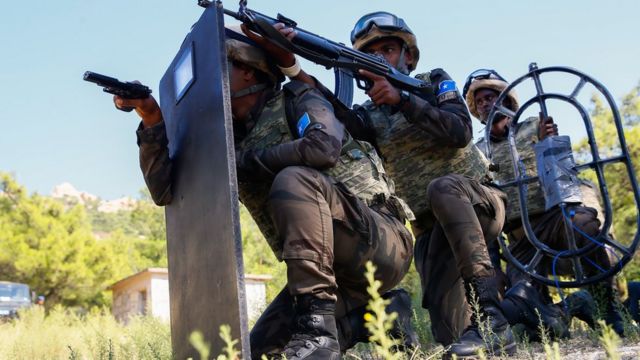
It was alleged that the military units Turkey had trained to fight against the radical Islamist organization Al-Shabab were used in the harsh intervention of the security forces of the Somali government against the opponents. The statements and visual data of Somali sources speaking to the BBC Turkish also strengthen the claim that these units are being used “as a means of repression of the power”.
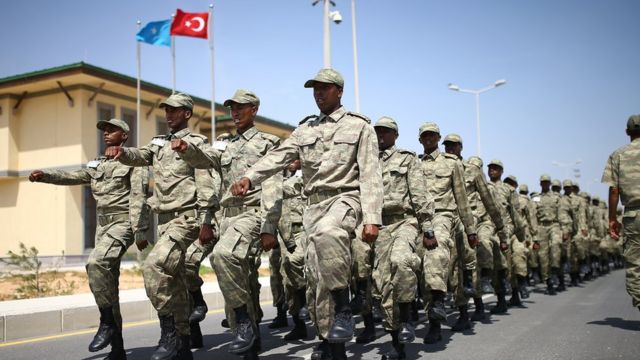
The armed forces in question are the Haramcad (Cheetah) Special Police Forces and the “Gorgor” (Eagle) Commando Brigade, which Turkey has trained at its military base TÜRKSOM in Somalia’s capital Mogadishu and Isparta.
The harsh intervention of Haramcad and Gorgor forces during the demonstrations organized by the opposition in Mogadishu on February 19, and the use of armored vehicles, which Turkey donated to Gorgor’s forces last year to fight the al-Shabaab, against the opponents taking to the streets, had a negative impact on Turkey’s reputation It is shown as “factors that make it.”
It was stated that these troops were put forward in raids and attacks on opposition candidates and the Mustaqbal radio channel in April. The radio channel started a legal process against Haramcad.
Answering the questions of the BBC Turkish, a senior member of the Haramcad forces said, “Turkey does not know that these forces are being used for personal benefits rather than for the benefit of the country.”
Ministry of Foreign Affairs: Some circles are trying to attract our country to domestic political debates
In a written statement to the BBC Turkish regarding these allegations, the Turkish Ministry of Foreign Affairs said, “It is known that some circles are carrying out a purposeful campaign to erode Turkey’s position in Somalia and it is known that it is trying to attract our country to domestic political debates, these attempts are futile.” He stated that the soldiers he trained are under the command of the Somali National Army and under the responsibility of the Federal Government.
However, opponents in Somalia call for a more active role in the use of Turkish-trained soldiers for political purposes as a tool of force and oppression against civilians.
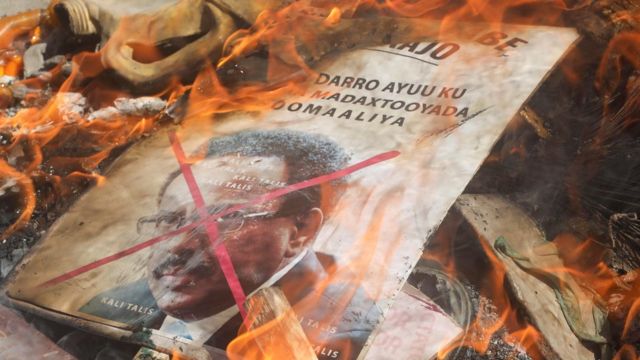
How did the political crisis begin in Somalia?
The reason that pushes different factions of the security forces into conflict in Somalia is the power struggle.
The 4-year term of office of Somali President Mohammed Abdullah Mohammed expired after February 8, 2021. In the country, on September 17, 2020, state leaders and Farmajo were agreed to meet and hold elections, but the election calendar could not be determined due to “allegations of irregularity” in federal election commissions and differences of opinion over how to distribute power in the tribal-based government system.
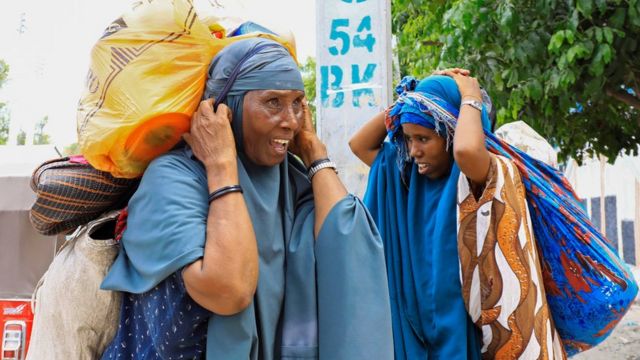
Dissidents took to the streets after the election was not held, and some of the international organizations withdrew their aid. The security forces were divided into pro-government and pro-opposition according to the tribes they belonged to, and violence brought the country to the brink of civil war.
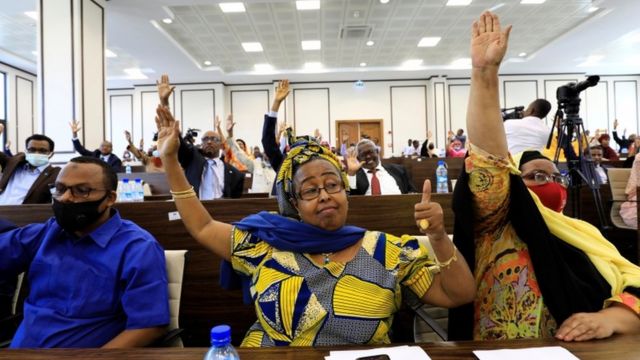
Farmajo’s signing of a controversial decision on April 12, extending his term of office by two years, was also seen as the last straw for dissidents. Farmajo stepped back on May 1 and said the country would go to the election as soon as possible. Prime Minister Mohammed Hussein assigned Roble to manage the election process.
With its aid and economic support, Turkey, Somalia’s biggest foreign ally, said in a statement through the Ministry of Foreign Affairs that they are pleased that the election process will be initiated.
Although Somalia decided to hold elections as of May, the conflicts and political stalemate in the last 3 months threatened to drag the country back into the civil war of 1991. According to many experts, security forces were also used as “political tools” in this process, especially with their tribal ties and the guidance of their leaders.
Haramcad and Gorgor, which Turkey had trained, were also seen as “security forces used by the President for personal purposes”.
Why is Turkey training Somali soldiers?
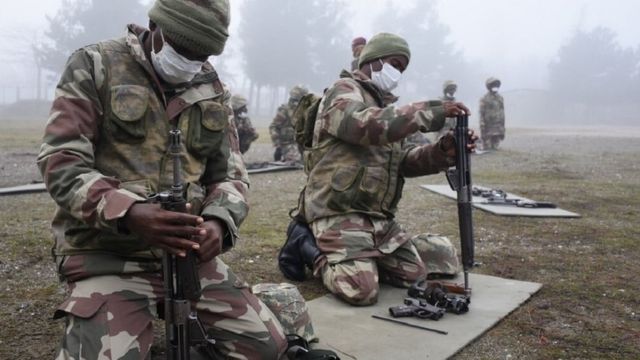
Turkey has been providing training to Somali soldiers at the TURKSOM base in Mogadishu and Turkey since 2017, within the scope of the military agreement between the two countries. The total number of trained soldiers is aimed to be around 15-16 thousand. This corresponds to about a third of the Somali army.
Turkey’s aim is to strengthen Somalia’s security infrastructure and defense in the fight against Al-Shabaab.
With the withdrawal of the African Union Mission to Somalia (AMISOM), the peacekeeping force in the region, will increase the responsibility of the troops trained by Turkey in the fight against radical Islamist organizations.
Turkey in Africa: A New Emerging Power?’ The editors of the book are Dr. Elem Eyrice
Tepeciklioğlu and Dr. Ali Tepeciklioğlu says that Turkey’s military aid to Somalia is a reflection of Turkey’s general policy towards Africa and that Somalia is ‘a showcase’ in Turkey’s African policy.
“The main purpose of Turkey’s opening to Africa is political and economic. Therefore, its military presence and military relations are an extension of the search for stability in Somalia. It is an extension of its pursuit of its economic and political interests by creating a more stable region in the Horn of Africa.
“(…) It would be illusory to expect a development there without military capacity. From an academic perspective, it is not unnecessary. Somalia is both a country with internal turmoil and by al-Shabaab under the threat of Islamic terrorism.
“(…) But it can also have a destabilizing effect. In this respect, Turkey needs to control where the weapons go and what the trained personnel are doing.” Abdi Samatar, a Somali academic at the University of Minnesota, drew attention to the difference between the job descriptions of the soldiers trained by Turkey and the areas they are used in:
“(There is an ideal scenario regarding the ‘role of the soldiers’ training Turkey has, as well as the role they play in practice. According to the ideal scenario, it was a good idea for Turkey to train Somali military force because the country needs a functioning security system to get rid of al-Shabaab The decision and proposal of the Turkish government to train the Somali army was welcomed by the majority of the Somali people.
“But the Turkish government does not understand that. Be it in Turkey or in the USA … In a well-established country, you teach soldiers to be a member of civil society before teaching them the art of firing weapons. You create a society with ideals and certain constitutional responsibilities. Once you’ve built a mindset where boundaries and responsibilities are set, you give military training.
“As a result of the training given without determining these boundaries and ideologies, these soldiers turn into a tool of pressure for many vicious issues. This is the biggest weakness of the system. You are a Somali soldier, what will you defend? How will you treat your own citizens? Who will protect the people from you? Has a system been established for their accountability?
“Also, Turkey provides ammunition and weapons while training these soldiers. The Somali government, the current head of state is a dictatorial regime. It is abusing the generosity of the Turkish people.”
Somali opponents also called for Turkey to postpone the shipment of weapons to Harmacad until aer the election, as the country entered the election process in December 2020, and warned that weapons and military power could be used to manipulate the elections. In a letter to the Turkish Embassy in Mogadishu, the opposition said that “they are worried about the rains of weapons on the country going through a sensitive period and that Harmacad could turn into a means of pressure”.
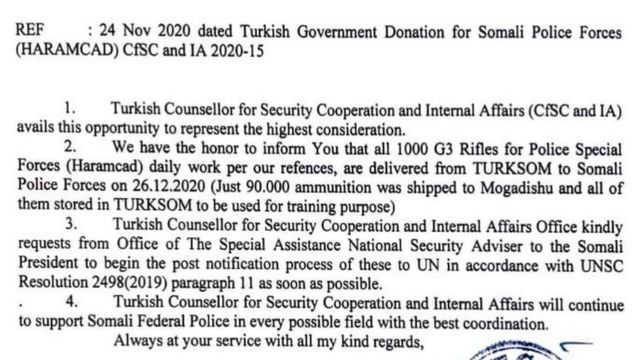
According to the information obtained by the BBC Turkish and the official document, one thousand G3 type rifles and 90 thousand ammunition opposed by the opposition were sent to Mogadishu by Turkey on 26 December 2020 for educational purposes. It was stated that the ammunition was stored in TÜRKSOM.
Opposition demonstrations in Mogadishu on 19 February Observers and eyewitnesses point to the opposition demonstrations on February 19 at the beginning of the events, when the Haramcad and Gorgor troops withdrew to domestic conflicts.
Somali academic Samatar, who returned to the United States about a month ago, was in a place close to the area where the incidents took place on February 19, when the security forces trained by Turkey intervened harshly in the street protests of opposition demonstrators in Mogadishu.
“The street walk was very close to where I was staying. I saw the fire, the bullets flying in the air with my eyes. The President’s initiation of such a thing was a very dangerous and cruel attempt,” says Samatar.
Gorgor’s troops intervened in the march by firing in the air first, then armed clashes broke out between the armed guards who supported the opposition, according to the accounts of eyewitnesses in the region and the posts on social media.
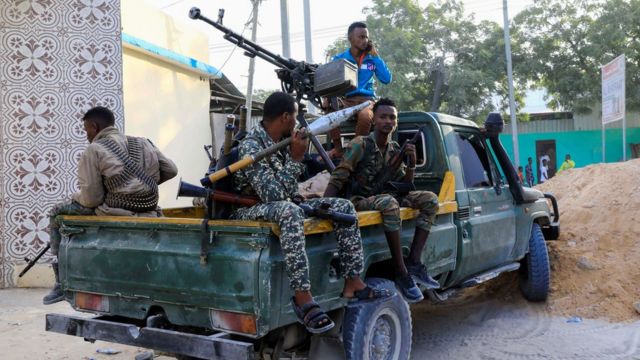
In the photos shared on the news agencies and videos on social media that day, it can be seen that the Turkish-made military armored vehicle ‘Kirpi’ produced by BMC, which Turkey donated to Gorgor special forces in August 2020 to fight the al-Shabaab, was also deployed against the opponents.
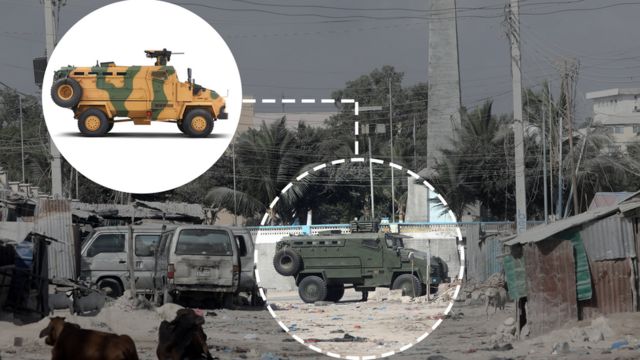
Türkiye ile Somali arasındaki Askeri Mali İş Birliği kapsamında; Somali ordusu için üretilen 12 adet KİRPİ mayına karşı dayanıklı zırhlı personel taşıyıcı, Mogadişu limanında Somali yetkililerine teslim edildi. pic.twitter.com/00z7ET39mg
— T.C. Millî Savunma Bakanlığı (@tcsavunma) August 31, 2020
“Unfortunately, the security forces trained by Turkey were used by Somali politicians and the Somali government against politicization and political opponents. They were first deployed in Mogadishu against the opposition on February 19, and then again in mid-April,” said Abdinor Dahir, a Somali analyst at Oxford University. He said, and it was the Somali government responsible for this:
“The responsibility for this is not with the Turkish government or the Turkish army. The command and control of the Somali security forces is in the Somali government. Turkey gives the responsibility to the Somali government. We must question them about how these forces are used.
“The politicization of the Somali army, especially the soldiers trained by Turkey, and its use against civilian protesters certainly negatively affects Turkey’s image in Somalia.”
In mid-April, the armed forces from the tribe of the opposition and the security forces from the tribe of President Farmajo came face to face again. Fires and clashes took place in the streets of Mogadishu.
Abdirahman Abdishakur Warsame, the leader of the opposition Wadajir Party, and the former President of Somalia , Hasan Sheikh Mahmud , said in their letter dated April 25 that Gorgor special forces affiliated to President Farmajo, trained and funded by Turkey, attacked their homes and Farmajo was responsible for the attack.
Farmajo's forces have attacked my residence and residence of Former President Hassan Sheikh Mohamud. We had warned against politicising the military. CPC has made clear that Mohamed Farmajo will be responsible for the consequences of this action. pic.twitter.com/8dECaEqNxq
— Abdirahman Abdishakur (@AAbdishakur) April 25, 2021
The Council of Presidential Candidates condemned the attack and stated that the head of the Somali National Intelligence and Security Agency (NISA), Fahad Yasin, bought the ammunition from AMISOM.
Former President Hasan Sheikh Mahmud said that the Maida Hotel, where he was with another former President Şerif Sheikh Ahmed, was also targeted during the events in Mogadishu on February 19. He stated that it was the second attack attempt against him for the attack in April.
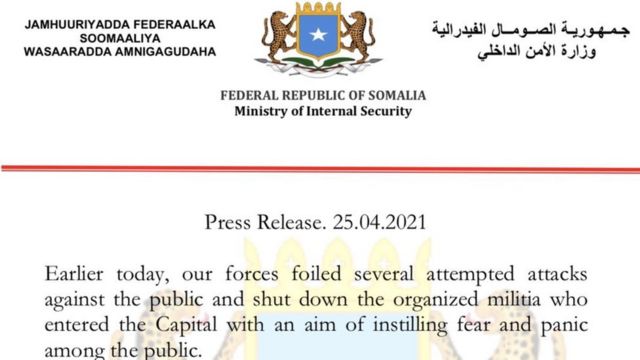
Somalia’s Ministry of Internal Security also made a statement in its written statement dated April 25, 2021 against the allegations that the opponents had attempted to attack. In the statement, it was stated that ‘the troops affiliated to the government prevented the organized militia forces’ attempts to attack Mogadishu to create fear and panic’ and the following statements were used:
“The Ministry of Internal Security warns against the politicization of our security institutions and the negative portrayal of the efforts of our brave forces who sacrificed their lives to protect our country. On the other hand, we are deeply concerned about the accusations of Former President Hasan Sheikh Mahmud. All our Heads of State are protected by the National Guard. The Somali Federal Government is very concerned about threats against their families. ”
Haramcad attacked radio station Independent and opposition media in Somalia were also the target of the attacks.
Mogadishu-based private radio station Mustaqbal was attacked on April 27th. Radio workers who spoke to the BBC Turkish claimed that the raid was organized by Turkey’s Haramcad police forces.
Journalists’ equipment, broadcast vehicles, cameras, and footage taken during the raid were confiscated, their computers were damaged, their desks were dismantled, and a gun was pressed against an editor’s chest.
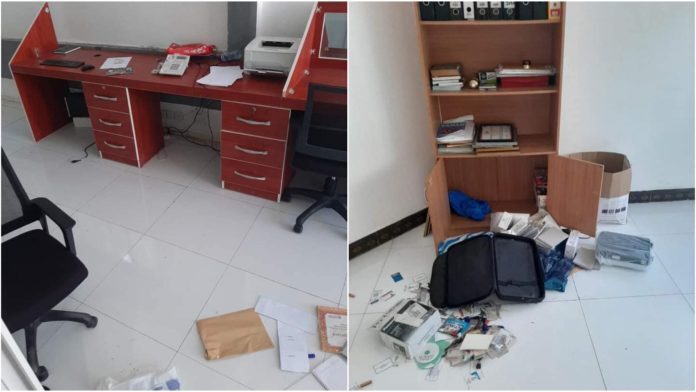
According to the information provided by the radio staff to the BBC Turkish, the reason for the raid is that they use the phrase “President Farmajo, whose term of office has expired” when describing the President in their broadcasts.
Radio Mustaqbal brought the attack of Haramcad troops to justice aer the attack, and NISA chief Fahad Yasin filed a lawsuit against Somalian Deputy Chief of Staff Abdinur Muhammed Ahmed. The legal complaint and inquiry request was processed by the Somali Federal Government Attorney General.
Haramcad senior official: Turkey does not know that these units are being used for personal purposes One of the most important breaking points of the separation based on tribal ties between Somali security forces was the dismissal of former Police Commander Sadiq ‘John’ Ömer for his reaction to President Farmajo’s decision to extend his term by two years.
Instead of the loyal ‘John’ Ömer, Farxaan Qaroole, a member of the Turkish-trained Haramcad unit, was replaced. It is alleged that Qaroole is a former co-Shabaab member.
This assignment also caused cracks within the armed unit. “Turkey is not satisfied with the name that runs the union now. It has a terrible past. Haramcad does not receive as much support from Turkey as before.” ” said.
Regarding the mission of the Haramcad member units, who did not want to be named due to security concerns arising from their opposition to the new administration of Haramcad and answered the questions of the BBC Turkish through a translator from Mogadishu, he said:
“The soldiers were trained to combat al-Shabaab. When there were hostages at the hotels by al-Shabaab in Mogadishu, when he opened fire on civilians, the Haramcad troops intervened.
“The reason Haramcad attacked the Mustaqbal radio station was the opposition language they used. Other media organizations were going to be raided. Farxaan Qaroole is responsible for these attacks. He is responsible for the union.”
“Under normal circumstances, Haramcad should operate under the Somali Defense Forces, but it receives instructions directly from the President. Without even the head of the Somali army, the Somali President can deploy these units anywhere and use them to attack anyone he wants.
“The Turkish government does not know that this union is being used for personal interests rather than for the benefit of the country. Farxaan Qaroole is very corrupt. It does not distribute the money that Turkey gives for its soldiers adequately and fairly. Each soldier has to receive 400 dollars per month, but he pays 100 dollars.”
“I don’t think Turkey knows that Haramcad is being used against opposition leaders or against government, media outlets.”
The Haramcad member said that on February 19, the security forces used real bullets in the intervention against the opponents, and they also had evidence to support this. However, he stated that he did not want to share this evidence with the BBC Turkish because he was concerned about his security.
What do Turkey and Somali officials say about the allegations?
The BBC asked the Turkish allegations to the Somali government spokesman, Presidency spokesman, Defense Minister and Somali Deputy Police Chief, but none agreed to respond to the questions and allegations.
“The event is a very sensitive issue,” said a source from the Somali government. After the Turkish Embassy in Mogadishu refused to answer the questions, the Turkish Ministry of Foreign Affairs made this statement in writing to the BBC Turkish regarding the allegations and Turkey’s military relations with Somalia:
“Security and the fight against terrorism continue to be the most important challenge in Somalia. The most important tool against this problem, which directly targets the stability of
the country and has regional repercussions, is the strengthening and capacity building to strengthen the security capabilities of the country, including the military and the police. We are continuing our efforts to support the establishment of a unified and disciplined Somali National Army, like Somalia’s other international partners, and in this sense, Turkey is the most active partner in Somalia supporting international force-building and capacity building efforts.
“Our Military Training Facility in Mogadishu TURKSOM has been providing training to Somali soldiers in order to increase the forces and build capacity that will form the backbone of the Somali National Army since 2017. TURKSOM is not a military base, it is a training facility.
Turkey does not have military units deployed in Somalia. In this context, the trained soldiers are under the command of the Somali National Army and under the responsibility of the Federal Government.
“On the other hand, it is known that some circles are carrying out a purposeful campaign to erode Turkey’s position in Somalia and are trying to attract our country to domestic political debates. These initiatives are futile. Turkey continues its activities in line with Somalia’s needs and understanding of partnership by embracing all segments of Somalia. .
“It is seen by all parties that this approach of Turkey has yielded concrete results in the last decade within the scope of the Somalia-led state-building process.
“Our cooperation in the field of security is only one pillar of our wide-ranging contribution.Our total humanitarian and development assistance to Somalia has exceeded $ 1 billion to date. Somalis have a wide range of services in various fields such as health, education, municipal services, infrastructure and the opening of water wells. “Numerous development projects have been completed or are ongoing. Turkey will continue to stand by the people of Somalia and contribute to capacity building efforts in the country to ensure lasting peace and stability.”
‘Turkey’s support for Somalia is important’ Speaking to the BBC Turkish, experts also comment that Turkey’s support for Somalia as a state policy is important and necessary, although questions arise among the opposition regarding Turkey’s military training and military support.
Academician Ali Samatar says that at the meetings he met with Turkish officials in Mogadishu, he got the impression that Turkey ‘did not pay enough attention’ to the incidents involving recently trained soldiers.
“There has been a sincere love for the country among the Somali people since President Erdogan’s visit during the starvation. He was the only foreign leader of that caliber who came to see what happened in the country and took it seriously and took immediate action. Great respect is shown to the president and the Turkish people. military training enjoys the same reputation.
“But the Turkish government should tell the Somali President and the Mogadishu regime that Turkey is not training these soldiers to harass the Somali people and the political forces.
If the regime is not willing to do so, they should suspend the process. At the very least, the collective partner who can impose that the soldiers are on duty to protect the people, not oppress the people. until an agreement is reached.
“The Somali opposition also has a legitimate right to make a request to the Turkish government. Ensure that the process is free and fair, prevent the army from intervening in the election process. Turkey has the authority to do this and keep the soldiers it trained in its headquarters until a joint agreement is reached between the opposition and the government. I think it’s legitimate. ”
Somali academic Abdinor Dahir says that Turkey’s military training is ‘professional, organized and the most effective force against co-Shabaab’ and comments that Turkey may be more active for reconciliation in this process:
“Turkey has supported the Somali national army in recent years and it has never been a problem. But now the mandate of the Somali government has expired and cracks have started to form.
“The Turkish government can use its weight over the Somali government and persuade the opposition groups in Somalia to come together to compromise on the election.
Turkey does not need to say to the Somali government, ‘I am withdrawing my security
forces.’ This would not help Turkey’s policy in Africa and Somalia. But Turkey can help mediate between the Somali government and opposition groups to resolve the issues as soon as possible.
“The problem here is not political, not security.”
Source:-Cagil Kasapoglu
BBC Turkish
Mustaqbal Media.
