

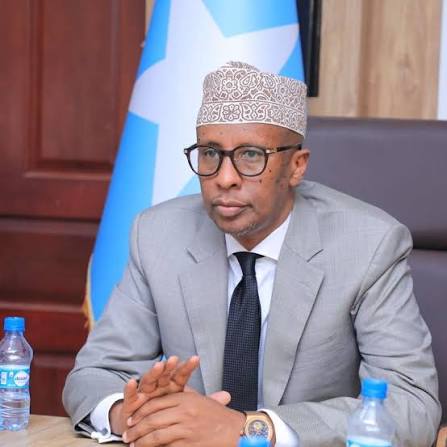
Somalia’s Minister of Energy and Natural Resources, Abdullahi Bidhan Warsame has attributed the rising cost of electricity in Mogadishu to increasing fuel prices and tensions in the Middle East, particularly disruptions affecting the strategic Strait of Hormuz.
Speaking at an event marking Somalia’s Fisheries Week, Bidhan said disruptions to fuel supplies passing through the Strait of Hormuz had increased operating costs for electricity companies, which largely depend on fuel to generate power.
The minister revealed that electricity companies had initially proposed doubling electricity tariffs, but the Ministry of Energy rejected the proposal. The companies subsequently implemented an increase of approximately 10 per cent.
“The reason for the electricity price increase is the situation in the Middle East, the closure of the Strait of Hormuz and the resulting fuel shortage,” Bidhan said.
He acknowledged that Somalia remains among the countries with the highest electricity costs. He said the federal government was prioritising investment in the energy sector to expand electricity infrastructure and ensure reliable and affordable power for consumers.
Bidhan noted that more than $250 million in investment would be required to strengthen Somalia’s electricity sector and improve access to affordable power.
He added that the government aims to reduce electricity prices by 45 per cent in Mogadishu and eight other cities across the country. However, he did not specify when the proposed reductions would be implemented.
The minister’s remarks come days after three major electricity providers BECO, Mogadishu Power and Blue Sky Energy announced on October 25 that they had increased electricity tariffs in Mogadishu and other parts of the country. The companies added five US cents per kilowatt-hour to existing rates.
The companies attributed the increase to sustained growth in global fuel prices over the preceding eight months, linking the trend to conflicts in the Middle East and disruptions affecting the Strait of Hormuz.
Unlike countries with extensive national power grids, Somalia depends largely on private electricity providers, many of which rely on diesel-powered generators to supply electricity to households and businesses.
The latest increase has heightened concerns about the ability of Somali households and businesses to cope with electricity costs, which were already a significant financial burden.
Mustaqbal
