

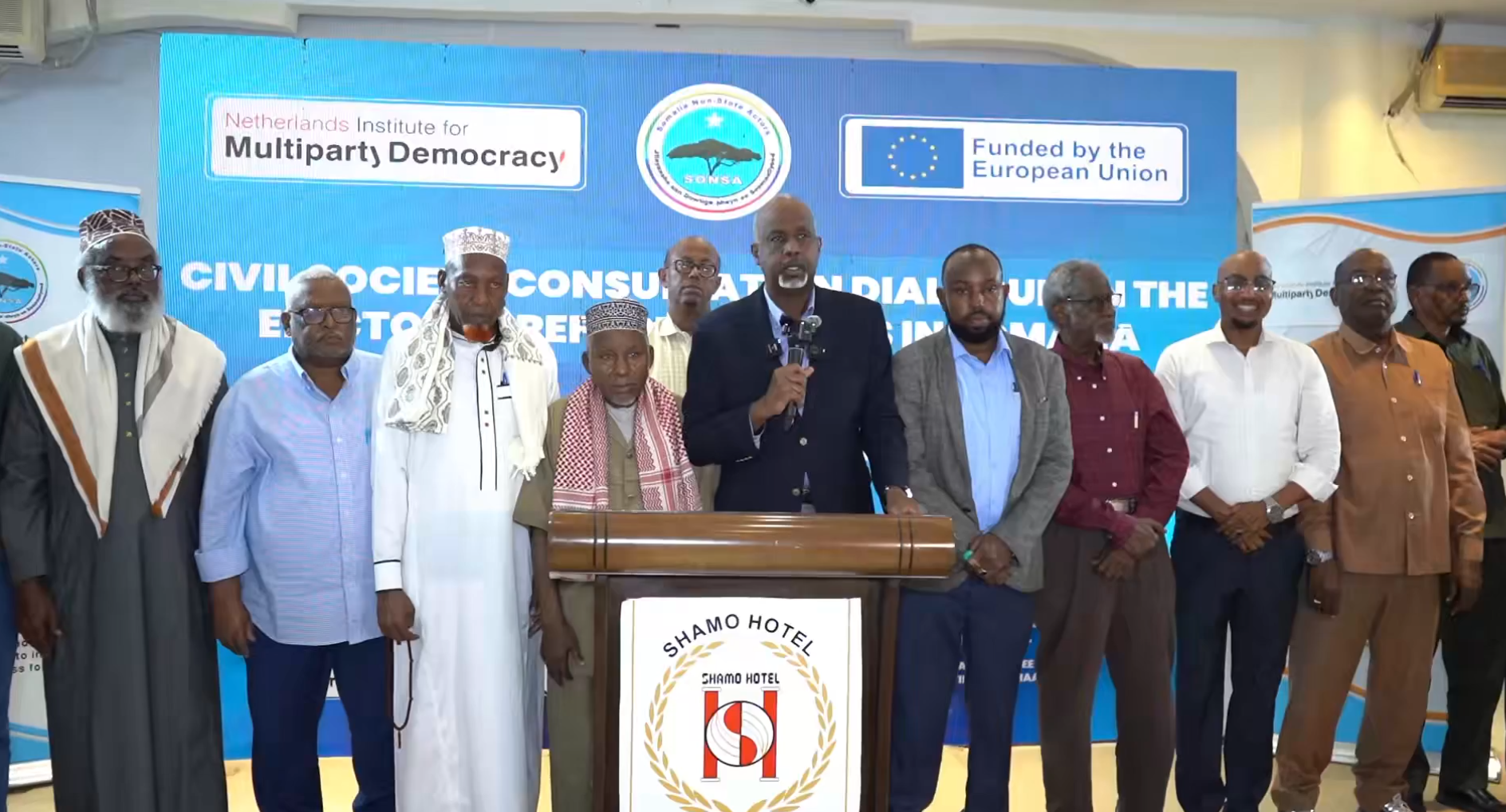
Somali civil society organizations have proposed a transitional constituency-based multiparty electoral model as a potential solution to the ongoing political dispute between the Federal Government and opposition groups over the country’s electoral framework.
In a position paper issued on July 23, the Somalia Non-State Actors (SONSA) platform said civil society organizations had reviewed electoral proposals advanced by opposition political stakeholders, including the Somali Future Council, Nabad iyo Nolol and the National Unity Council, as part of broader efforts to find common ground on the country’s electoral future.
Under the proposed model, citizens would directly elect members of the House of the People from agreed electoral constituencies. Candidates would contest elections under registered political parties, while voters would cast their ballots directly for individual parliamentary candidates rather than voting exclusively for closed party lists.
SONSA said temporary safeguards should be established during the transition to ensure inclusive representation and prevent communities and groups from feeling excluded from the political process.
The civil society platform outlined several principles it said should underpin the electoral framework. These include meaningful participation by Somalia’s Federal Member States in implementing the electoral process, including coordination and electoral security, as well as an independent and credible mechanism for resolving electoral complaints and disputes.
It also called for transparent and mutually agreed procedures governing voter registration, voting, vote counting and the announcement of election results.
On political inclusion, the organizations proposed temporary safeguards to protect the participation of groups that have historically faced inadequate representation, including women and other vulnerable communities. The proposal also calls for safeguards linked to Somalia’s 4.5 power-sharing arrangement and clear, enforceable measures to strengthen the political representation of persons with disabilities.
SONSA further advocated for both international and domestic election observation, including monitoring by civil society organizations.
The position paper called for the electoral framework to emerge from a broad political agreement involving the Federal Government, Federal Member States and opposition political stakeholders. It said Somali civil society should have a visible role in observing the process, facilitating dialogue and monitoring implementation of any political agreement reached.
The organizations emphasized that the credibility and legitimacy of an election cannot depend solely on the technical electoral model adopted. They argued that political consensus and public confidence are equally essential to ensuring that an electoral process is accepted as legitimate.
Against the backdrop of ongoing political disagreements over Somalia’s electoral arrangements, SONSA urged political actors to move beyond competing proposals and embrace compromise to establish a transitional electoral framework that promotes inclusive representation and broad federal consensus.
The proposal comes as Somalia’s political stakeholders continue efforts to reach an agreement on the country’s electoral system, with the dispute over the framework remaining a major source of political tension.
Mustaqbal
