

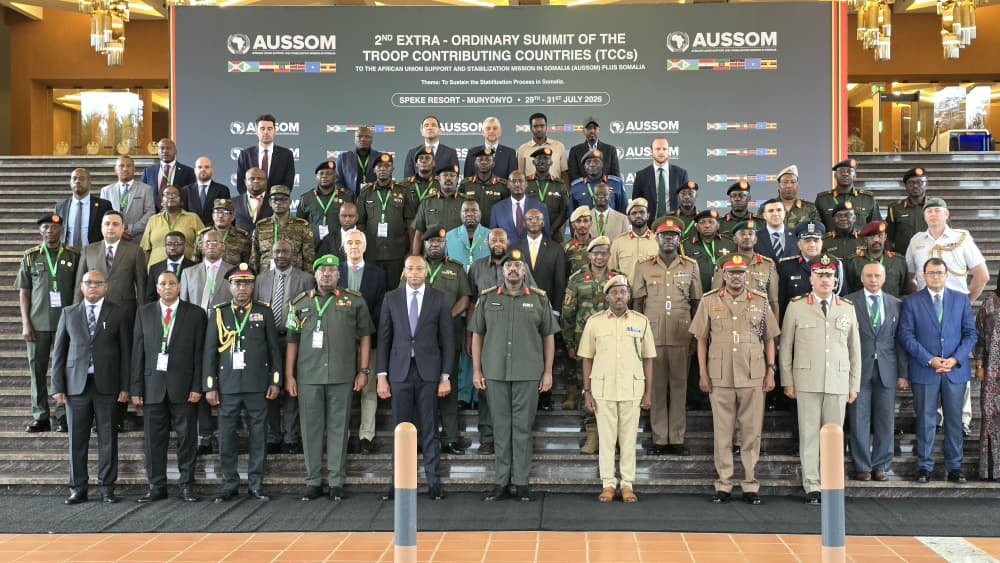
The Government of Uganda is hosting a high-level summit in Kampala, bringing together countries that contribute forces to the African Union Support and Stabilisation Mission in Somalia (AUSSOM).
The meeting comes as concerns continue to grow about the mission’s future its funding, responsibilities, and how it will operate beyond 2026.
The summit, which is expected to last for three days, is set to address ways to sustain efforts aimed at strengthening security and stability in Somalia. Its theme is “Continuing the process of stabilizing Somalia.”
According to Uganda’s Ministry of Defence, the summit opened on Wednesday with a session attended by the military commanders of the participating countries.
On Thursday, the agenda shifts to meetings involving the defence ministers of those nations. The top-level heads of delegations are expected to meet on Friday.
Delegations from Burundi, Djibouti, Egypt, Ethiopia, Kenya, Somalia, and Uganda are expected to participate. Officials from the African Union, the United Nations, and the IGAD regional bloc are also attending.
The summit is taking place at a sensitive time, as Somali forces, AUSSOM troops, and international partners continue tough operations against Al-Shabaab, while the Federal Government of Somalia prepares to take full responsibility for the country’s security.
A key topic at the summit is the future structure and direction of the mission including how AUSSOM will function after the end of 2026, the number and deployment locations of troops, and the sources of sustainable financing.
In December 2025, the UN Security Council extended AUSSOM’s mandate for an additional year and called for continued support for Somalia’s plan to take over full security responsibilities. However, uncertainty remains about the mission’s exact post-2026 arrangement, including troop deployment and long-term funding.
Government maintained that although Al-Shabaab continues to carry out attacks in parts of Somalia, Somali forces, local organised forces and international friendly partners have regained control of key areas from the group
Government officials also claim that operations have targeted and disrupted Al-Shabaab leadership and fighters, while restoring essential services in some areas previously under the group’s control such as health facilities, schools, and roads connecting communities.
Mustaqbal
