

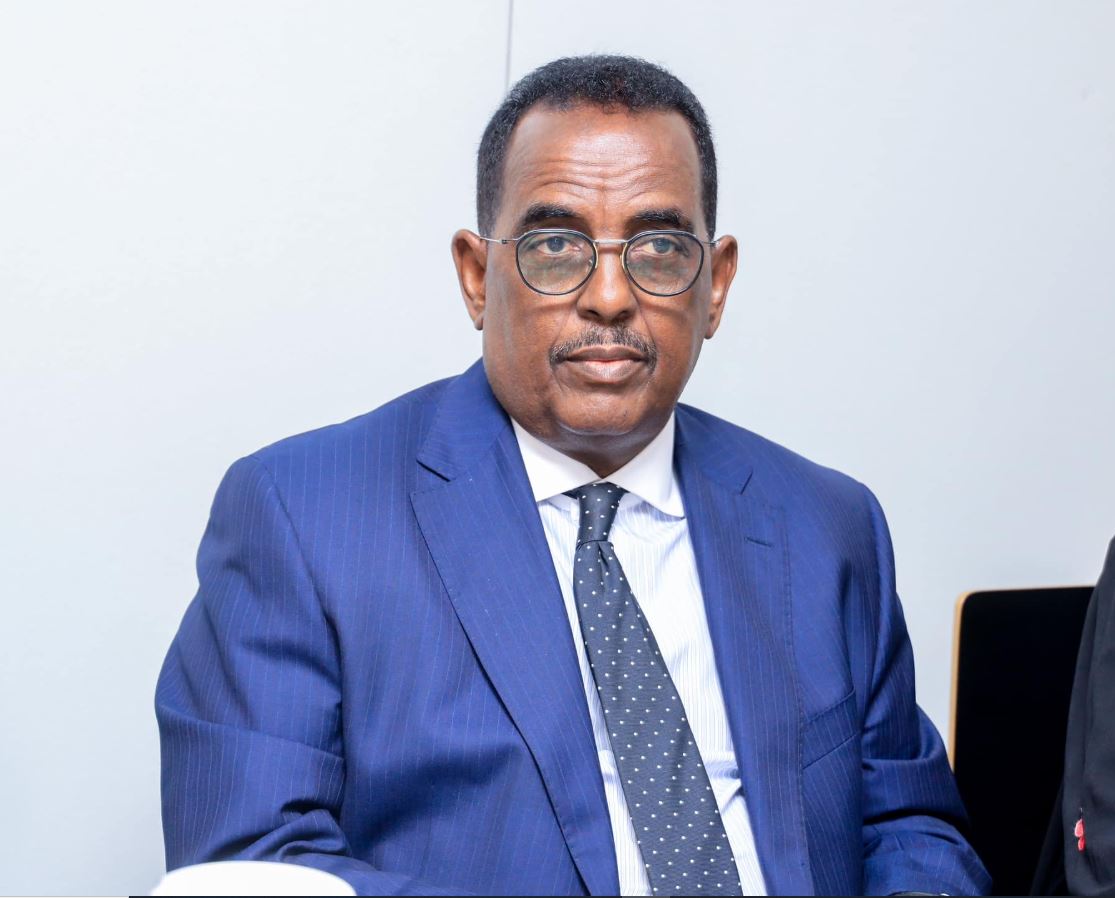
Somalia’s Minister of Internal Affairs, Ali Yussuf Hosh stated that the country will not back down from its current political and electoral path.
He said politicians and opposition parties have a constitutional right to present their political views, but he emphasized that every proposal must support national progress, protect the stability of the state, and ensure peace and order in Somalia.
“Politicians and opposition parties have a constitutional right to present their political views, but every proposal must support national progress, protect the stability of the state, and ensure peace and order in Somalia.”He said
The minister noted that discussions surrounding the electoral process have entered a new stage. He criticized some opposition figures for failing to provide a viable alternative to the new electoral framework. Instead of offering new solutions, he said, they are calling for the country to return to the old indirect election system.
Hosh argued that since Somalia’s government institutions were rebuilt, the country has gone through six administrations, all formed under indirect electoral arrangements. He said **three** of those were temporary (acting) governments, while the other **three** were official governments established under the same system.
He further said that Somalia has now moved toward an electoral model based on one person, one vote describing it as a reflection of the Somali people’s demand to directly choose their preferred leadership.
He described the change as part of efforts to complete the process of democratization and state-building.
The minister also accused politicians still supporting the indirect system of opposing ongoing political progress. He said calls to revert to the old system do not align with Somalia’s interests or with the aspirations of the public for a permanent and stable electoral system.
Regarding the government’s political direction, the Minister said the administration is prioritizing the completion of the Constitution, the implementation of direct elections, and the establishment of state institutions based on full legality. He stressed that the government is not planning to return to previous indirect electoral arrangements.
Somalia’s political future he said will be determined by the Somali people, insisting that the government has chosen a path of progress that will not be reversed, and that current reforms are necessary for building a modern democratic state.
His remarks come amid growing political tension over electoral procedures and constitutional amendments, as the government and opposition remain sharply divided on the country’s political roadmap.
The statement also coincides with a proposal from the Somali Future Council to establish a broad-based transitional body to manage the transition, restore the proper functioning of state institutions, and improve constitutional and electoral processes until national institutions are built under widely accepted legal legitimacy.
Mustaqbal
