

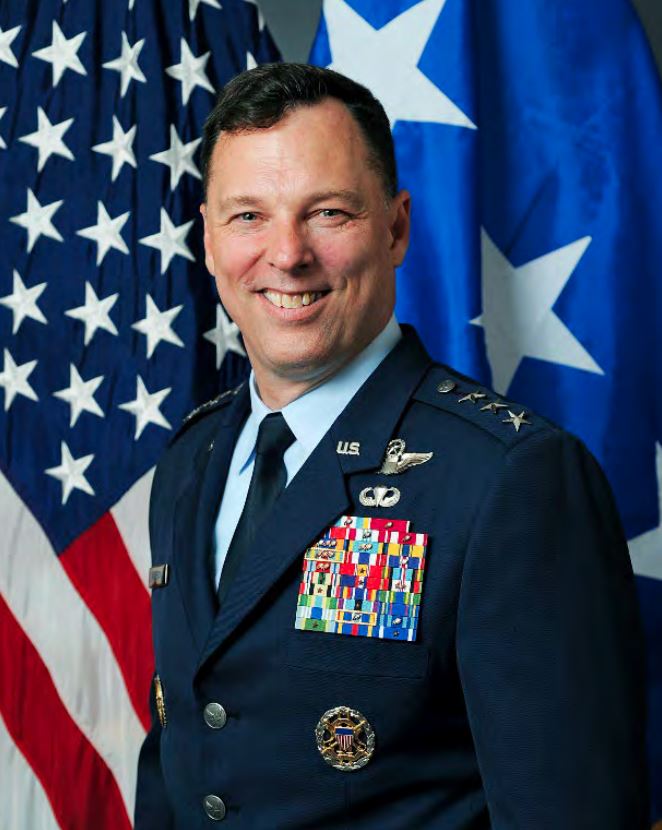
The US Senate has confirmed US Air Force General Dagvin R M Anderson will serve as the next Commander of US Africa Command (Africom) — marking the first time an Air Force officer will assume command of the US military’s combatant command for Africa.
Anderson’s job position change, announced officially by the US Department of Defence (DoD) on 4 June, was finalised by voice vote in the Senate on 31 July, following a nomination received from President Donald J Trump on 28 April. He succeeds Africom’s sixth commander — US Marine Corps General Michael E Langley, who remains in command until the formal Change of Command ceremony — an event expected to be held in Stuttgart, Germany, headquarters of Africom.
“If confirmed, I would command US Armed Forces as directed by the Secretary of Defence and approved by the President and ensure US Africom has ready and postured forces to execute directed national defence missions, respond to military contingencies, and deter conflict,” Anderson told the Senate Armed Services Committee.
“Lieutenant General Dagvin R M Anderson has been nominated for appointment to the grade of general and assignment as commander, US Africa Command,” the Pentagon noted in its June release, now superseded by his Senate-confirmed promotion.
Anderson currently serves as Director for Joint Force Development, Joint Staff, where he has been instrumental in shaping the US military’s future operational concepts. Previously, he commanded Special Operations Command Africa (SOCAFRICA) from 2019 to 2021, giving him extensive field-level and strategic experience with African partners.
Having learned from these experiences, it “…informs my understanding of the changing character of war and how the future Joint Force needs to change to counter the growing threat from China,” Anderson said, in response to questions from the Senate oversight committee.
Anderson’s appointment carries special resonance for African land forces, air chiefs, and naval officers who have built long-standing professional ties with Africom leadership—first under General Stephen J Townsend, then under General Langley. His return to Africom, this time as its top commander, reflects the intentional continuity of command relationships in a volatile security environment.
Importantly, Anderson’s confirmation also signals how the Trump administration’s “Peace Through Strength” doctrine is being re-applied to the African theatre. The message: America’s military partnerships are not episodic—they are enduring, backed by high-level leadership continuity and strategic alignment.
Anderson will be the first Air Force officer in Africom’s history to hold the post of Commander. All previous Africom leaders have come from either the Army or Marine Corps. His background offers a fresh perspective on integrated operations — combining air, cyber, and special operations capabilities — especially vital as terrorist and transnational threats evolve across the continent.
This landmark appointment is a reflection of the Pentagon’s growing emphasis on multi-domain operations and joint-force integration across Africa’s vast geographic and operational terrain. His Air Force lens could prove pivotal for bolstering African air defence partnerships, ISR (intelligence, surveillance, reconnaissance) cooperation, and trans-regional logistics.
As part of his confirmation, Anderson has been promoted from Lieutenant General to the grade of General—a four-star rank reserved for only the most senior US military leaders.
According to the Congressional Research Service, only 37 officers across the entire US military held four-star rank as of 2023. These officers led the most sensitive and high-responsibility commands in the DoD, including the Chairman of the Joint Chiefs of Staff, the service chiefs, and combatant commanders like those at Africom.
The process is constitutionally and legally rigorous. Under Title 10 of the US Code, the President nominates officers for general rank and Senate confirmation is required. These promotions must be tied to positions “of importance and responsibility,” ensuring rank is not symbolic, but mission-critical.
Anderson’s case, under Title 10, US Code, Chapter 6, reflects the role’s gravity. This section of American law empowers the President—via the Secretary of Defence, in this case, Pete Hegseth—to create, oversee, and adjust combatant commands like Africom. It mandates that combatant commanders report directly to the Secretary of Defence and the President, underlining their global-level responsibility and strategic alignment with national defence objectives.
Anderson’s deep operational experience in special operations provides added significance. As commander of SOCAFRICA, he led efforts to counter al-Shabaab, ISIS, and JNIM, strengthening partner forces while emphasising African-led solutions. This fieldwork aligns with current US policy that prioritises cost-effective, partner-led strategies — particularly in the Horn of Africa.
Now, with a four-star’s command authority, he will guide these operational insights into theatre-wide strategy.
African political and military leaders — especially those who have collaborated closely with Africom through military exercises, defence dialogues, and capacity-building programmes—are watching this transition closely.
Anderson’s return underscores US reliability and intent to preserve institutional memory rather than reset relationships with each new commander. In diplomatic terms, it is a reaffirmation of mutual trust and military-to-military credibility—crucial in a time when, according to US government officials, China and Russia are aggressively seeking to displace Western influence on the continent.
Moreover, with Africom playing an increasing role in counterterrorism, maritime security, and transnational crime interdiction, continuity of leadership is more than symbolic. It is operationally imperative.
Defence Web.
