

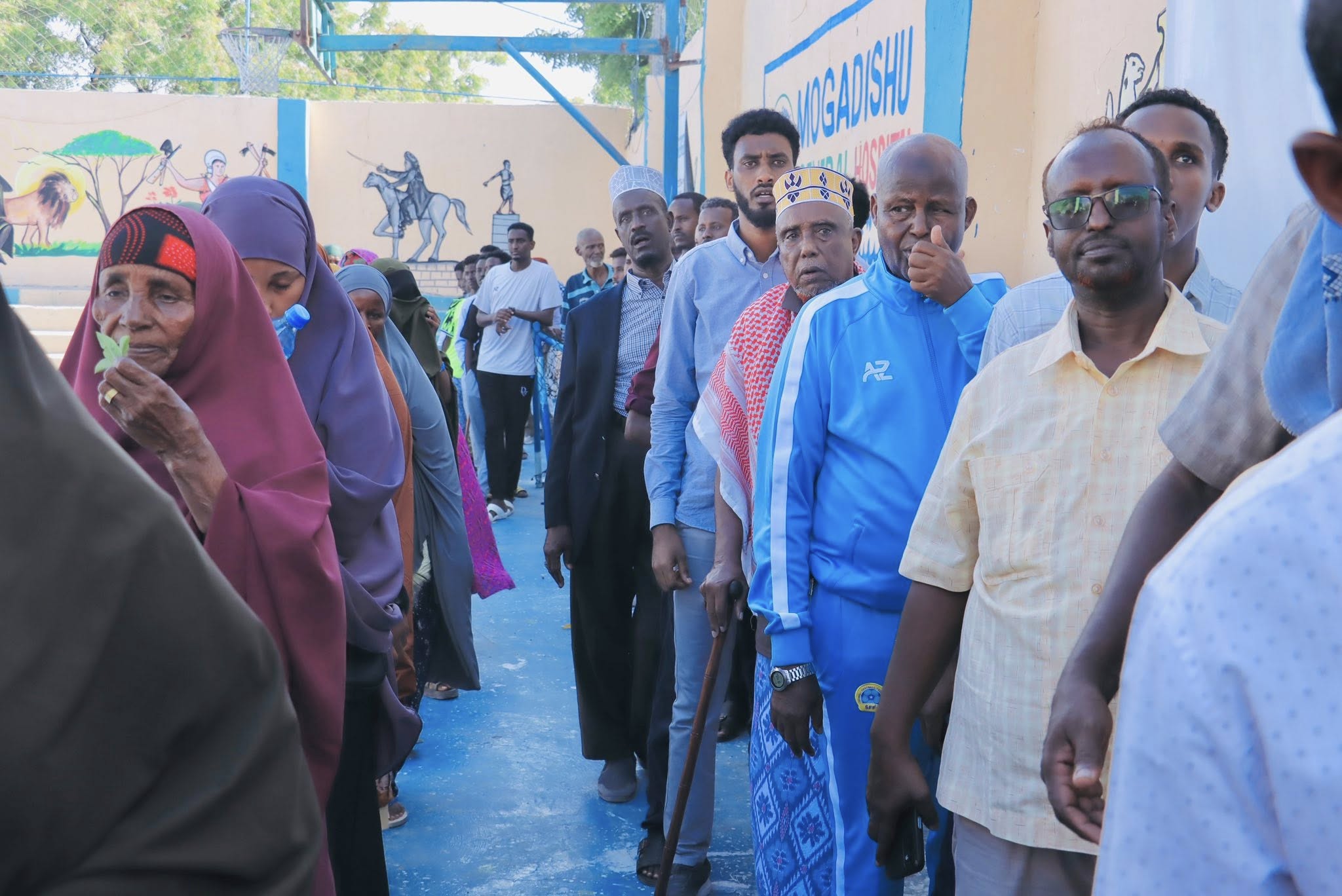
Voter registration in Somalia expanded to six additional districts in Mogadishu, including the populous Kaaraan and Hodan districts. This is part of the country’s preparations for its first one-person, one-vote elections in over five decades, scheduled for late June 2025.
Hundreds of residents turned out early Saturday morning, lining up at registration centers to secure their voter cards and claim their right to participate in the upcoming local council elections. The enthusiasm marks growing public confidence in the electoral process and signals a potential turning point in Somalia’s democratic journey.
The districts included in this new phase of registration are Kaaraan, Hodan, Hamar Weyne, Hamar Jajab, Wadajir, and Dharkenley. Electoral officials from the National Independent Electoral Commission (NIEC) have been deployed to facilitate the smooth rollout of the registration exercise, with support from local authorities and security agencies.
Kaaraan, one of Mogadishu’s most densely populated and politically active districts, witnessed a particularly high turnout. Many young people, some registering for the first time in their lives, expressed hope that the local elections would bring change and improved governance.
The one-person, one-vote electoral system is expected to replace the clan-based power-sharing model that has dominated Somali politics for decades. The shift is expected to empower citizens, strengthen local governance, and enhance the legitimacy of elected officials.
Election officials have urged all eligible citizens to register before the deadline and emphasized the importance of civic participation in shaping Somalia’s future. The NIEC has pledged transparency and security throughout the process, with international observers expected to monitor the elections.
Somalia last held a one-person, one-vote election in 1969, prior to a long period of military dictatorship, civil war, and instability. The upcoming polls, therefore, represent a historic moment in the country’s quest for stability, democracy, and self-determination.
As the June elections approach, authorities and civil society groups continue to engage communities through voter education and awareness campaigns to ensure an inclusive and peaceful electoral process.
Mustaqbal
